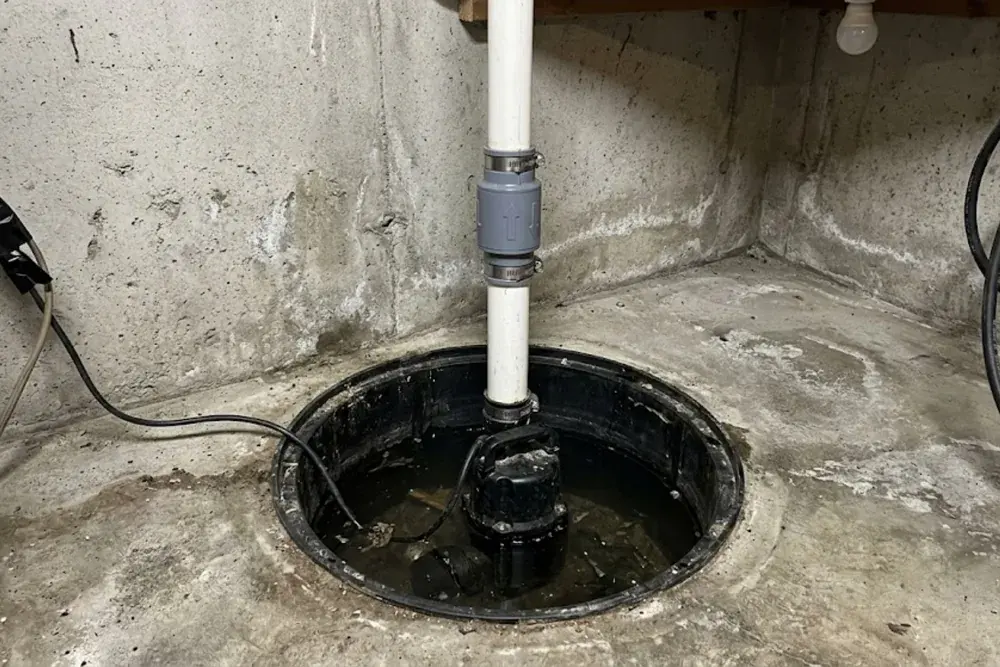
A sump pump discharge line carries water from the pit to a safe place outside the house. It should leave the pit through a check valve, slope away from the foundation and end at least several feet from the walls. It must never connect to the sanitary sewer unless your sewer provider allows it. A bad discharge line can flood the basement even when the pump works.
The Parts of a Discharge System
| Part | Job | Common mistake |
|---|---|---|
| Check valve | Stops water from draining back into the pit | Installed backward or omitted. |
| Discharge pipe | Carries water out | Too small, too many bends. |
| Weep hole | Relieves air lock in the pump | Not drilled, or drilled above the valve. |
| Union or coupling | Allows the pump to be removed | Glued solid, so the pump cannot be pulled. |
| Outlet | Releases water away from the house | Too close to the foundation or on a neighbor's lot. |
Pipe Size and Layout
Most residential sump pumps use a pipe of 1.5 or 2 inches, matched to the pump outlet. Keep the run as short and straight as practical, since every elbow adds friction. Slope the pipe so water drains out after the pump stops. A line that holds water in a low spot freezes and splits in winter.
Where the Water Goes
Sump water should go to the yard, a drainage swale or a storm drain that allows it. It should not run onto a neighbor's lot, across a sidewalk where it can freeze into ice, or into a sanitary sewer where rules prohibit it. Ask the owner of the receiving system what is allowed before you connect.
An outlet buried below the surface and ending in a pop-up emitter keeps the lawn tidy and stays open in cold weather.
Freeze Protection for Utah Winters
Discharge lines freeze at the outlet, where water sits in the pipe. A line that slopes downhill and drains fully after each cycle is less likely to freeze. An outlet that is buried or ends in a freeze-relief fitting gives water a second path if the end blocks. Insulating exposed pipe helps, and keeping the discharge away from walkways avoids ice patches.
Winter checks for a discharge line
- Walk the outlet after the first hard freeze and look for ice.
- Make sure the pipe slopes away and drains.
- Pour a bucket of water into the pit to confirm the pump moves it.
- Clear snow and leaves from the outlet.
- Confirm a battery or water backup is working.
Magna Note: Why the Pit Fills
The Utah Geological Survey's report on the March 18, 2020 earthquake notes small cracks and sand boils near the epicenter north of Magna. Sand boils are a liquefaction feature, which forms where loose, saturated soil is shaken, so they show that groundwater was close to the surface in that area.
For a homeowner, that means a sump pit near the valley floor can fill quickly in spring and after storms. Plan the discharge to handle the pump running often, not rarely, and check with your sewer provider before sending water anywhere near the sanitary system. Magna Water District provides sewer service and can tell you whether groundwater discharge to its system is allowed.
The Check Valve Question
A check valve prevents the water in the discharge line from falling back into the pit when the pump stops. Without one, the pump runs more and wears faster. With one, you may hear a thump when it closes. Use a quality quiet check valve, and place it above the pit where it can be replaced.
Power and Backup
The pump needs a dedicated, protected outlet. During a storm, power may fail just when the pit is filling. A battery backup pump or a water-powered backup keeps the pit from overflowing during an outage. Test it a few times a year.
If the pump is failing or the pit is flooding, see sump pump service. If water enters through the walls or floor despite a working pump, basement waterproofing covers the drainage side.
Homes in West Jordan and Kearns share the same winter freeze issue and the same question about where to send the water.
Pump Types and Why They Matter for the Line
| Style | Strength | Consideration |
|---|---|---|
| Submersible | Quiet, sits in the pit, handles debris better | Harder to reach for service. |
| Pedestal | Motor above the pit, easy to service | Louder, takes more space. |
| Battery backup | Runs during power outage | Battery needs testing and replacement. |
| Water-powered backup | No electricity needed | Uses household water and needs pressure. |
A bigger pump pushes more water through the discharge pipe. If the pipe is too small, the extra power creates noise and wear rather than flow. Match the pipe size to the pump outlet and keep elbows to a minimum.
Common Installation Mistakes
Watch for these
- Gluing the check valve in a spot that cannot be reached for replacement.
- Running the pipe flat so water sits and freezes.
- Discharging at the foundation wall where water returns to the drain tile.
- Leaving out the air relief hole near the pump.
- Plugging the pump into an extension cord instead of a dedicated outlet.
Before You Start Digging
Plan the route on paper. Note sprinkler lines, utility markings, tree roots and the grade of the yard. Call for a utility locate before any digging. Keep the discharge line away from the septic area if your property has one. Taking an hour to plan avoids a broken line, a flooded flower bed or a pipe that holds water.
Finally, label the shutoff and the power cord for the pump so anyone in the house can find them during a storm. A simple tag costs nothing and saves time when seconds matter.
Sewer Rules and Discharge
Utah applies the International Plumbing Code (IPC) with statewide amendments, and your city or county building department enforces it. Local sewer rules decide whether sump water may enter the sanitary system, and most places prohibit it. Ask your sewer provider before you connect to a drain.
Sump Pump Discharge Line Questions
Several feet at a minimum, and farther where the ground slopes toward the foundation.
Often not. Ask your sewer provider, since many prohibit it.
Water left standing in the pipe, a flat run, or an outlet blocked by ice or snow.
Parts of the area do. The state earthquake report documented sand boils near the 2020 epicenter, which indicates saturated soil close to the surface.
Usually not for a simple yard outlet, but check with your city or county if the line crosses public land.