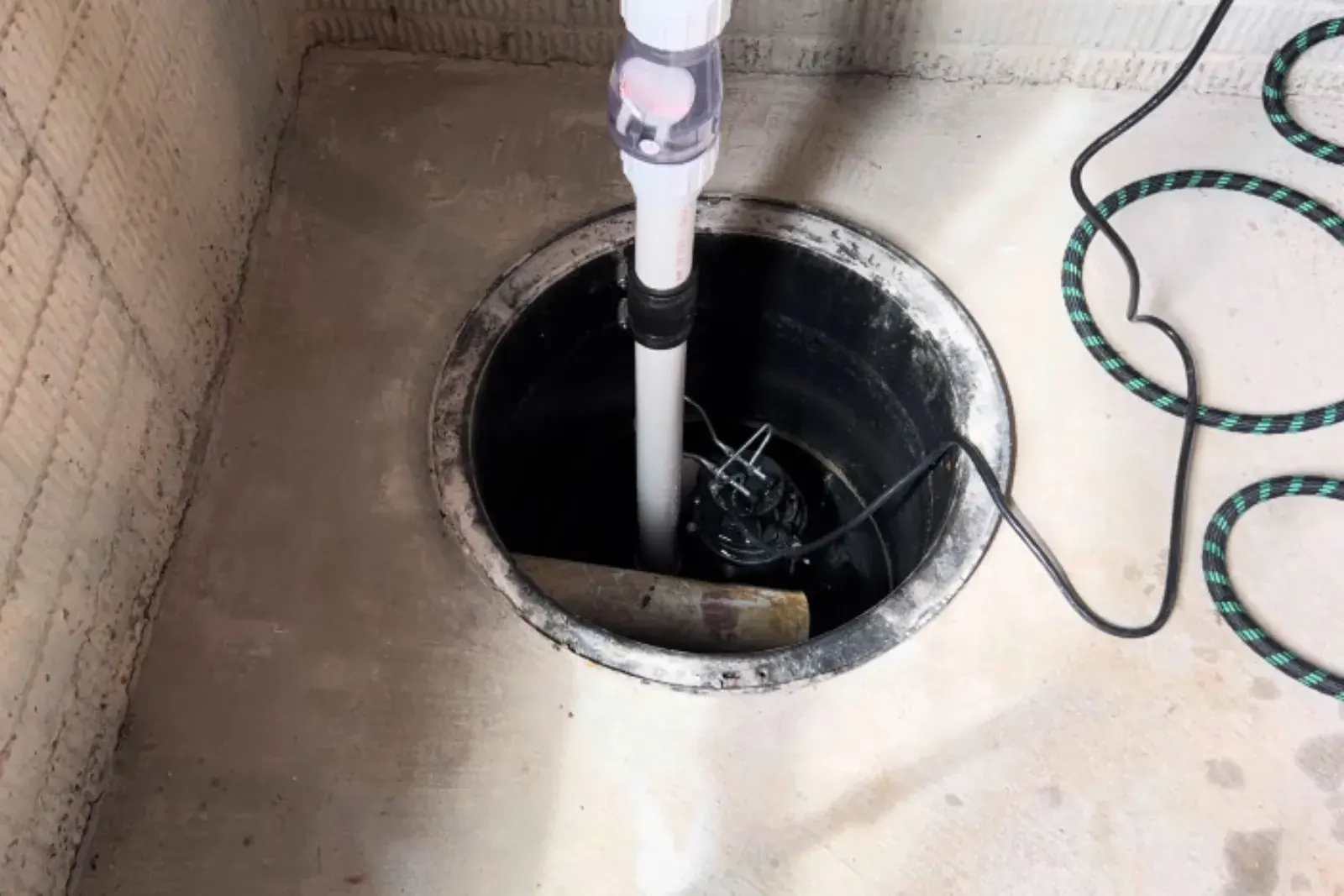
A failed sump pump during a storm or snowmelt can put inches of water in a basement within hours. If water is rising, do not walk through it if the electrical panel or outlets are low, and call the 24/7 line. We handle sump pump emergencies at night and on weekends.
Sump Pump Emergency: What to Do
While you wait
- Check whether the pump is plugged in and the breaker has not tripped.
- Check that the float moves freely in the pit.
- Look at the discharge line outside for ice or blockage.
- Move belongings off the floor.
- Do not touch wet electrical equipment. Shut off power at the panel only if you can reach it dry.
Why Sump Pumps Fail
| Symptom | Cause | Fix |
|---|---|---|
| Will not start | Stuck float or tripped breaker | Free float, reset. |
| Runs constantly | Stuck float or failed check valve | Adjust or replace. |
| Runs but no flow | Clogged intake or frozen discharge | Clear intake, thaw line. |
| Loud and rattling | Worn impeller or debris | Replace the pump. |
| Pump works but basement floods | Undersized pump or high water table | Upsize, add backup. |
Magna Groundwater and Snowmelt
The Salt Lake Valley's shallow groundwater varies by area, and homes on the lower benches near the lake plain see higher water tables than those near the foothills. Spring snowmelt from the Oquirrh Mountains raises the water table, which is when many pumps are tested hardest.
Check your pit before March. A pump that sat dry all winter may be stuck.
Battery Backup and Water-Powered Options
Pumps stop when the power goes out, and storms often cause outages. A battery backup pump or a water-powered backup keeps the pit from overflowing during an outage. Battery systems need testing and replacement every few years, while water-powered units run off house pressure but use water.
If water enters despite a working pump, the cause may be exterior drainage, covered under basement waterproofing. A broken discharge line may also be a water line matter, depending on the route.
Discharge Lines and Where the Water Goes
Discharge must carry water away from the foundation, not into the sewer, which most cities ban. Check that the line slopes away, ends well from the house, and has a check valve so water does not drain back. In winter, a buried or insulated line avoids freeze-ups.
What Affects Sump Pump Cost
Pump grade, pit work and backup shape the price.
Insurance and your real number
Water damage from a failed pump is often excluded unless you have an endorsement. Check your policy. Call (385) 488-1892 for a quote.
Pump Not Running?
Call the emergency line now.
Testing a Sump Pump Before It Matters
Check the outlet
Make sure the pump is plugged into a working, protected outlet.
Pour in water
Add a bucket of water to the pit until the float rises.
Watch the cycle
The pump should start, empty the pit and shut off cleanly.
Check the discharge
Walk outside and confirm water is leaving the pipe and moving away.
Test the backup
Unplug the main pump briefly and confirm the backup starts.
If the pump hums but does not move water, the impeller may be jammed or the check valve stuck. If it cycles every few seconds, the check valve may be missing and water is draining back into the pit.
Pit Care and Float Position
The pit should be clear of silt, gravel and debris, and the float should rise and fall without touching the walls. A pump sitting on gravel draws grit into the impeller, so it should rest on a flat paver or a solid base. A cover on the pit keeps out debris and reduces humidity in the basement. These small details extend the life of a pump more than the brand name.
Where Sump Water May Go
Utah applies the International Plumbing Code (IPC) with statewide amendments, and your city or county building department enforces it. That code and local sewer rules together limit where pump discharge can go, and many places prohibit sending groundwater to the sanitary sewer. Ask your sewer provider and building department before you connect the discharge to anything other than a yard outlet.
Sump Pump Questions
Yes. Active flooding gets emergency dispatch.
Many last around ten years, depending on use.
If your pit is active, a backup protects you in outages.
A high water table, a leaking line or a stuck check valve could be the cause.
Yes. A pit is cut in the slab and the discharge is routed. See plumbing installation.