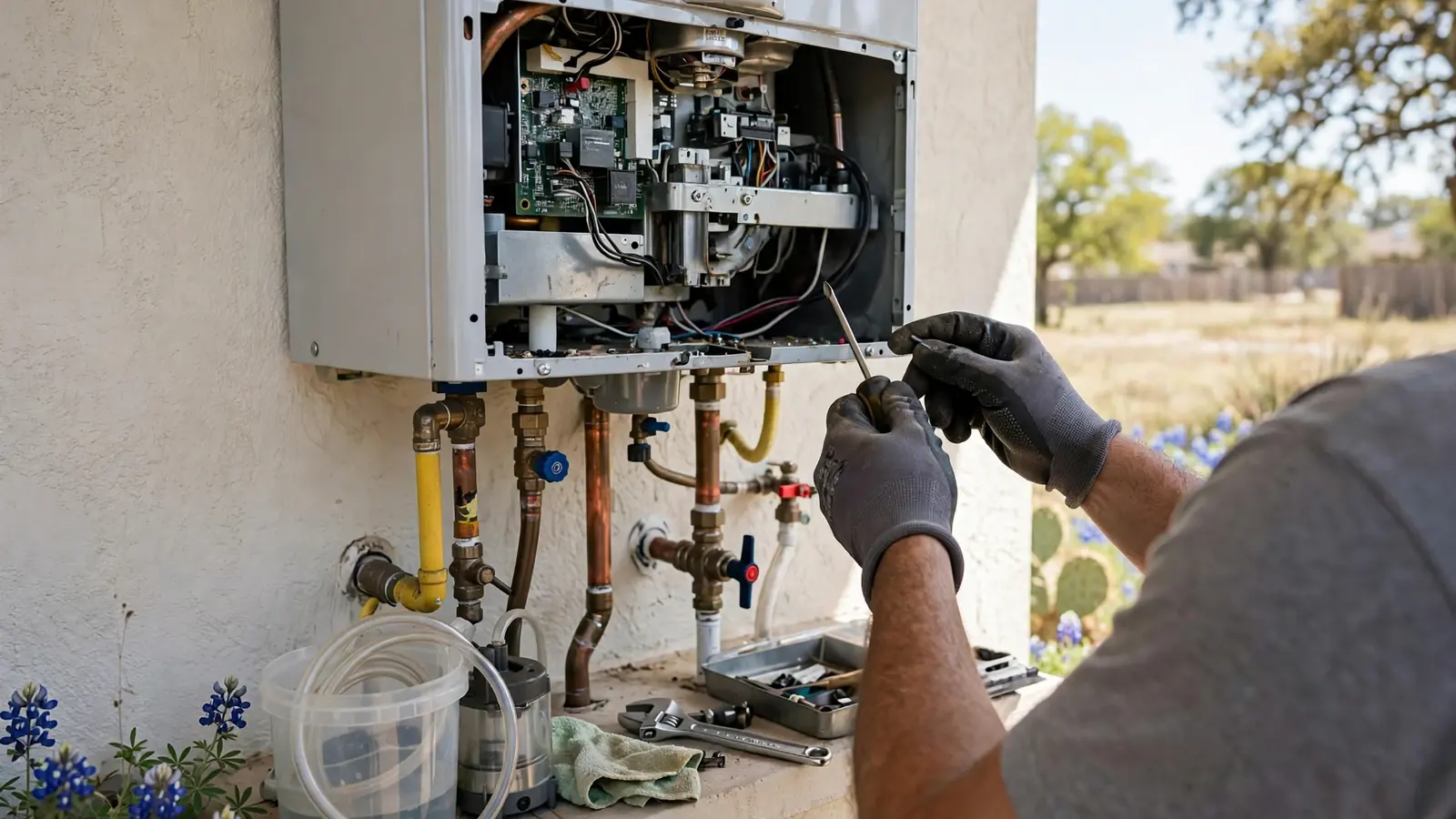
A tankless water heater heats water only when you use it. When you open a hot tap, a flow sensor detects water moving through the unit and tells the burner or heating elements to turn on. Cold water enters, passes over a heat exchanger and leaves hot in seconds. There is no tank to keep warm, which is where most of the efficiency gain comes from.
The Parts Inside the Unit
A tankless heater has a few key components. A flow sensor detects demand. A control board decides how much heat to add. A heat exchanger transfers heat to the water, and a gas model also has a burner, an igniter, a gas valve and a venting system. An electric model replaces the burner with powerful heating elements.
| Part | Job | What goes wrong |
|---|---|---|
| Flow sensor | Detects water flow and starts heating | Fouled by debris or scale, so the unit does not fire. |
| Heat exchanger | Transfers heat into the water | Scale narrows passages and reduces flow. |
| Control board | Matches heat to flow and set temperature | Error codes, shutdowns. |
| Burner and igniter (gas) | Produce the heat | Dirty burner, failed igniter. |
| Heating elements (electric) | Produce the heat | Burn out, trip breakers. |
| Venting | Removes exhaust (gas) | Blocked or improperly sized. |
Gas Versus Electric Tankless
Gas tankless units deliver high flow and are common for whole-house use. They need an adequately sized gas line, proper venting to the outside, and a small electrical connection for the controls. Many are condensing models that capture extra heat from exhaust, and those need a drain for the acidic condensate.
Electric units are simpler to vent but pull a lot of electrical power. A whole-house electric model can require a large electrical service, so an electrician may need to check your panel before the plumber can install it.
What a house needs for a gas tankless unit
- A gas line sized for the unit's maximum input.
- Venting to the outside that meets the manufacturer's instructions.
- An electrical outlet for the controls.
- A condensate drain for condensing models.
- Isolation valves so the unit can be flushed.
Why Tankless Does Not Mean Endless Hot Water
A tankless unit can run all day, but it has a maximum flow rate. If you run a shower, a dishwasher and a washer at once, the unit may not keep up and the water temperature drops or the unit shuts down. Sizing the unit to your fixtures and your coldest inlet water temperature avoids this. In winter, incoming water is colder, which lowers the flow a unit can heat to your set temperature.
The Cold Water Sandwich and Wait Times
Because the unit only fires when water flows, you can get a brief burst of cold water between two hot uses. Plumbers call it the cold water sandwich. A recirculation system or a small buffer tank reduces it. Long pipe runs also mean a wait for hot water to reach a distant tap, just like with a tank.
Magna Note: Dissolved Minerals
Magna Water District's 2023 water quality report lists total dissolved solids at an average of 639 mg/L, with a range of 460 to 848 mg/L. The report notes a secondary standard of 500 mg/L, which is a guideline for taste and appearance rather than a health limit.
For a tankless heater, dissolved minerals are the reason maintenance matters. They form scale inside the heat exchanger over time, which narrows the passages and reduces flow. In a high-mineral area, plan on periodic flushing as the manufacturer directs, and have isolation valves installed so a flush takes minutes instead of an hour.
Maintenance That Keeps a Tankless Unit Running
The main task is descaling. A plumber isolates the unit, circulates a descaling solution through the heat exchanger with a small pump, and rinses it out. Many manufacturers call for this annually in hard water areas, though the schedule depends on your water and usage. Cleaning the inlet screen and checking the venting are quick additions.
A water softener reduces the scale load and is worth considering with a tankless heater. If you already have a unit and it is giving trouble, water heater repair covers diagnosis, and the tankless water heater page explains installation.
Tankless Versus Tank: A Short Comparison
| Factor | Tankless | Tank |
|---|---|---|
| Standby heat loss | Very little | Constant, small. |
| Space | Wall mounted, compact | Floor space needed. |
| Upfront cost | Higher | Lower. |
| Simultaneous demand | Limited by flow rate | Limited by tank volume. |
| Maintenance | Scheduled descaling | Occasional flushing. |
Homes in Taylorsville and West Jordan face the same choice. The right answer depends on your gas line, your venting and how your household uses hot water.
Sizing a Tankless Heater to Your Home
Sizing starts with flow and temperature rise. Add up the flow rates of the fixtures you expect to run at the same time. A shower is often around two gallons per minute and a dishwasher or washer uses less. Then find the difference between your coldest inlet water and your target temperature. A bigger rise at the same flow needs a more powerful unit.
| Step | What you do |
|---|---|
| List peak hot water uses | Count showers, sinks and appliances that run together. |
| Add their flow rates | Use the labels or manufacturer data. |
| Pick a winter inlet temperature | Cold months set the hardest case. |
| Compute the temperature rise | Target temperature minus inlet temperature. |
| Match a unit's rated flow at that rise | Check the manufacturer's performance chart. |
An undersized unit is the most common reason people dislike tankless heaters. A plumber who sizes for winter, not summer, avoids it.
Installation Details People Forget
Gas tankless units often need a larger gas line than the tank heater they replace. The vent material and route change, since many units use stainless or special plastic venting instead of a metal flue. Condensate must go to a drain or a neutralizer. Isolation valves and a pressure relief valve are part of a proper install. Leaving any of these out makes maintenance harder or the unit unsafe.
Standards for Gas and Venting
Gas tankless installs follow the manufacturer's installation standards and the local gas and plumbing rules. Utah applies the International Plumbing Code (IPC) with statewide amendments, and your city or county building department enforces it. Ask the installer to confirm the gas line size and vent materials in writing.
What to do if you smell gas near any heater
- Leave the house and do not use switches or phones inside.
- Call your gas utility or 911 from outside.
- Do not relight anything.
- Keep others away until help arrives.
- Have a plumber inspect before you restart.
Tankless Water Heater Questions
It can be, particularly for smaller households and tight spaces. Your gas supply, venting and water minerals decide how well it works.
Many are rated for around twenty years with maintenance, but scale and neglect shorten that.
Most gas models need electricity for controls, so they will not run without power.
Dissolved minerals form scale on the heat exchanger. Regular flushing and a softener limit the effect.
Sometimes. Tankless units often need more gas than a tank heater, so the line is checked first.