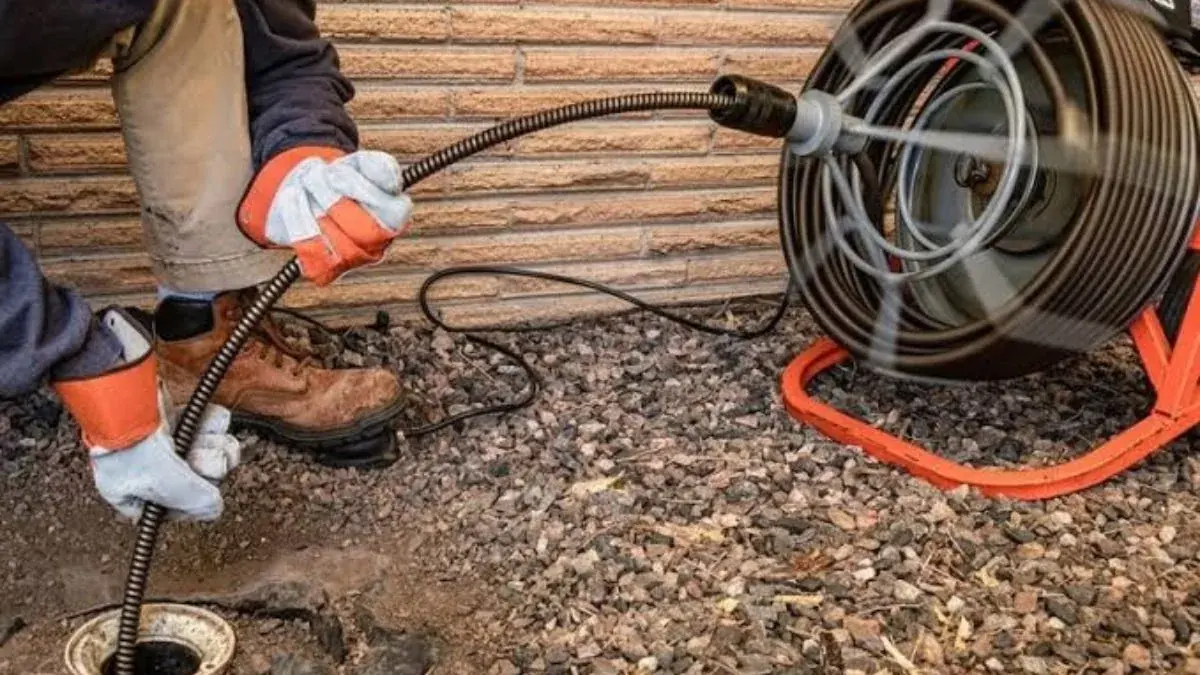
A storm drain carries rain and snowmelt away from your property. When it clogs with leaves, silt or ice, water pools in the yard, the driveway or the window wells. To clean a yard drain, remove the grate, scoop out debris, flush with a hose and check that water runs freely. If it does not, the pipe below is blocked and needs a cable or jetter.
Storm Drain or Sewer Line?
A storm drain handles clean runoff. A sewer line handles wastewater. They are separate systems and must stay that way. Do not connect a downspout or a yard drain to the sanitary sewer, and do not pour household waste into a storm drain. Storm drains often flow to a ditch, a creek or a detention basin, and pollutants end up in the water downstream.
Steps to Clean a Yard Drain
Remove the grate
Lift it carefully, wearing gloves.
Scoop out debris
Remove leaves, mud, trash and silt by hand or with a small shovel.
Flush with a hose
Run water to see whether it drains.
Probe the pipe
A garden hose with a nozzle or a drain auger can push through a soft blockage.
Replace the grate
Make sure it sits level and flush with the ground.
What Clogs Storm Drains
| Blockage | Season | Fix |
|---|---|---|
| Leaves and seed pods | Fall | Scoop and flush. |
| Silt and sand | After storms | Scoop, then jet. |
| Ice | Winter | Thaw carefully, never with chemicals. |
| Roots | Any | Cable and cut. |
| Trash and debris | Any | Remove, add a debris guard. |
| Collapsed pipe | Any | Camera and repair. |
Winter and Spring in Utah
Snowmelt in spring brings a rush of water at the same time that leftover leaves and gravel clog the grates. Before the thaw, clear snow and ice from drains and window wells so melt has somewhere to go. A drain buried under a snowbank cannot work.
Magna Note: Water and Sewer Are Not Storm Drains
Magna Water District describes itself as providing drinking water and sewer service. That means the district's pipes are not the storm drain system, and a flooded street or a blocked catch basin in the public right of way is a different agency's job.
For a homeowner, the line is simple. A drain on your property that carries your roof and yard runoff is yours to keep clear. A catch basin at the curb or a drain on a state route such as SR-201 belongs to the road owner, which may be the township, the county or the state, so ask which one before you call. If you cannot tell, a plumber can trace the pipe.
When the Pipe Itself Is Blocked
A hose and a gloved hand clear a surface blockage. A blocked pipe needs a jetter, which can flush silt and cut roots, and a camera to see what is down there. Silt is the usual cause in newer subdivisions where construction left loose soil. See hydro jetting and drain cleaning.
Preventing the Next Clog
Simple habits
- Keep gutters clear so debris does not wash into yard drains.
- Install grate covers or debris guards on drains under trees.
- Clean drains before the first big storm and again after leaf fall.
- Mark drain locations before snow so they are not buried.
- Keep downspouts discharging away from the foundation.
If water backs up toward your foundation, the problem can quickly become a basement issue. See sump pump service for the interior defense. Homes in West Jordan and Taylorsville face the same spring rush.
Window Wells and Area Drains
Window wells, stairwell drains and driveway trench drains work the same way as yard drains but are easier to forget. A window well with a drain at the bottom can fill with leaves and mud until it holds water against the glass. Scoop it out each fall, check that the drain flows, and add a cover to keep debris out.
A stairwell drain to a basement entry should be tested with a bucket of water before the rainy season. If it backs up, the connected pipe needs cabling or jetting.
Snow, Ice and Safe Thawing
When a drain is frozen shut, pour warm water slowly, not boiling water, which can crack plastic grates. Avoid salt and chemical ice melters in a drain, since they flow downstream. Clear snow from the drain location after each storm so melt has a path. If a pipe freezes repeatedly in the same spot, it may be too shallow or lack the slope to drain, which a plumber can correct.
When the Water Will Not Go Down
A drain that fills and stays full after you remove debris has a blockage or a broken pipe further along. A camera can find a collapsed section, a root mass or an offset joint. The fix could be as simple as jetting, or as involved as repairing a short section. Either way, knowing the cause saves repeat work.
Gutters, Downspouts and the First Fifteen Feet
Most yard drain clogs begin on the roof. Gutters fill with leaves and seed pods, overflow, and carry debris down the downspout into the drain. A clear gutter is the cheapest storm drain maintenance there is. Extend downspouts away from the house with solid pipe, not a flexible accordion that holds water and freezes.
The first fifteen feet from the foundation matter most. If water is landing there and running back toward the wall, no drain will keep up. Regrade the soil to slope away, add a splash block or underground extension and keep planting beds from trapping water against the wall.
A Simple Yearly Routine
Pick two dates, one in late fall after the leaves drop and one in early spring before snowmelt peaks. On each date, clear the grates, flush the drains with a hose and clean the gutters. Take a photo of each drain when it is clean so you can see changes over time. A routine that takes an hour twice a year prevents most storm drain calls.
Rules for Storm Drainage
Storm drainage rules are set by your city or county, and the federal Clean Water Act guides how stormwater is managed. Dumping waste in a storm drain is generally prohibited. Utah applies the International Plumbing Code (IPC) with statewide amendments, and your city or county building department enforces it.
Storm Drain Questions
Often yes, but check with the drain's owner. Some places restrict discharge.
The agency that owns the road, which differs for city, county and state roads. Ask your township or county first.
Yes. A camera shows roots, breaks and silt.
The district describes its services as drinking water and sewer, so storm drains are a separate system.
No. Use warm water carefully, since chemicals harm plants and waterways.