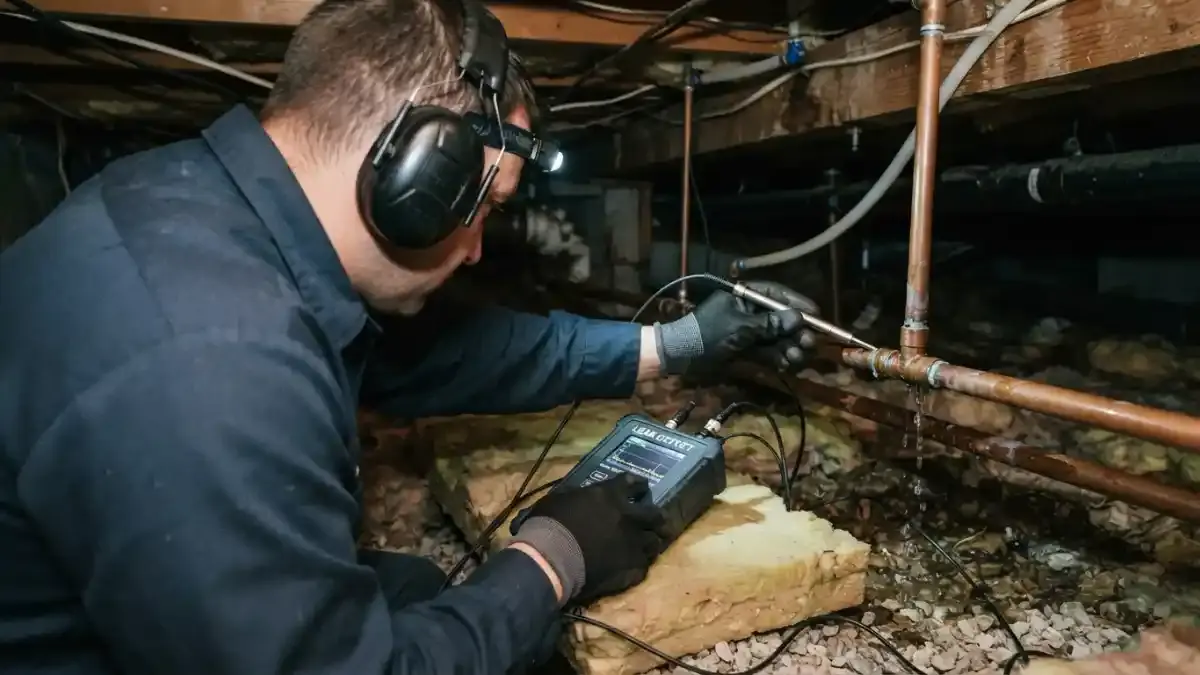
An acoustic leak detection device listens for the hissing or rushing sound that water makes as it escapes from a pressurized pipe. A sensor on a wall, floor or pipe amplifies the sound, and the operator moves it until the sound is loudest, which marks the leak. It works well on pressurized supply lines and poorly on drains. Before you rent or buy a device, run a meter test to confirm that a leak exists.
Start With the Meter Test
Turn off all water
Close every faucet and make sure no appliance is running.
Read the meter
Note the leak indicator or the dial position.
Wait 30 minutes
Do not use any water.
Read it again
If the dial or indicator moved, water is escaping somewhere.
If the meter moves, close the main valve at the house and check again. If the meter stops, the leak is inside the house. If it keeps moving, the leak is on the service line between the meter and the house.
How Acoustic Devices Work
A leak creates vibration in the pipe and the surrounding material. A contact sensor or a ground microphone picks up the vibration and converts it to sound or a signal. Some systems use two sensors and a correlator, which calculates the leak location from the time delay between the signals. Professionals use these along with other methods.
| Method | Finds | Limit |
|---|---|---|
| Acoustic listening | Pressurized leaks, noisy breaks | Quiet pinholes and plastic pipe. |
| Correlator | Leaks along a pipe run | Needs access to two points. |
| Thermal imaging | Hot water leaks, wet areas | Needs a temperature difference. |
| Tracer gas | Slow or quiet leaks | More equipment, used by professionals. |
| Pressure testing | Whether a system holds pressure | Does not locate the leak. |
| Moisture meter | Damp materials | Shows damage, not the source. |
What Gets in the Way
Background noise, such as a running refrigerator, traffic or an HVAC system, can drown out a leak. Plastic pipe such as PEX carries sound poorly, so a leak may be hard to hear unless the sensor is close. Concrete slabs dampen and spread sound. Water pressure also matters, since a leak at low pressure is quiet.
Magna Note: Corrosion Control Is Not Pipe Age
Magna Water District's 2023 water quality report states that lead and copper tap samples, using 2022 data, were below action levels. That tells you the district's water is not currently driving lead or copper corrosion above the federal action levels.
That is a statement about the water, not about the pipes inside your home. A house built decades ago can still have copper that is pitting, galvanized steel that is clogging or joints that are failing. A leak in an older home is usually about the age of the pipe and the pressure it carries, so test your meter and listen carefully before assuming new water is the cause.
DIY Listening Tips
Try this before calling
- Hold a screwdriver handle to your ear and press the tip on the pipe near fixtures.
- Listen at the water heater, the main valve and the meter.
- Check the toilet with a few drops of food coloring in the tank.
- Look at the ceiling and walls for stains or soft spots.
- Check outdoor hose bibs and irrigation valves.
When to Call a Professional
A professional brings acoustic equipment, correlators and thermal cameras, and knows how to combine them. They find the leak, then repair it with minimal damage. For more on how this works, see leak detection, and if a pipe has burst, burst pipe repair applies.
Customers in Kearns and West Valley City often start with a high water bill. The meter test above takes a half hour and tells you whether it is a leak.
Reading the Meter Like a Detective
Many water meters have a small triangle or dial that spins when any water moves. If it spins with every fixture off, you have a leak. Note how fast it spins. A slow creep suggests a small drip or toilet leak. A fast spin suggests a larger break. Write the time and the reading so the plumber can compare.
| Observation | Possible meaning |
|---|---|
| Slow steady creep | Running toilet or dripping fixture. |
| Steady medium spin | Pipe leak, irrigation, or a failing valve. |
| Fast spin | Major break on service or house line. |
| Stops when house main closes | Leak is inside the house. |
| Keeps moving with main closed | Leak is on the service line. |
Toilets: The Silent Culprit
A toilet that runs without a sound can waste more water than a visible leak. Add a few drops of food coloring to the tank, wait fifteen minutes without flushing and look at the bowl. If color appears, the flapper is leaking. Flapper replacement is a simple repair, and it is the first thing a plumber checks on a high bill.
What a Professional Report Looks Like
After detection, you should receive a plain description of where the leak is, how deep it is, what material the pipe is and what repair is recommended. Photos help. A marked spot on the floor or ground, with a measurement from a fixed point, lets a repair crew find it. Ask for this in writing before the plumber begins cutting into a wall or slab.
Questions for your plumber
- How sure are you of the location, and what confirmed it?
- How much of the wall or floor must be opened?
- Is there a less invasive way to reach the pipe?
- Will you reroute the pipe rather than repair a slab leak in place?
- What does the repair include besides the pipe?
Why Early Detection Pays
Water finds weak spots and widens them. A pinhole that sprays a fine mist inside a wall soaks insulation, feeds mold and stains drywall long before a puddle shows. Catching it early means a small repair and a patch instead of a gutted wall. If your bill climbs for two cycles in a row with no change in habits, treat that as the signal to run the meter test.
Know the Source of the Method
Acoustic leak detection relies on measurable physics, the same principle utilities use when they survey their own mains. When you hire someone, ask them to explain the method and the finding. Utah applies the International Plumbing Code (IPC) with statewide amendments, and your city or county building department enforces it.
Acoustic Leak Detection Questions
Yes, but consumer devices are less sensitive than professional equipment.
Often, with a sensitive device and quiet conditions, but concrete dampens sound.
Not well. Drain leaks do not make the same noise because they are not pressurized.
The district reports that lead and copper samples were below action levels in its 2023 report, so pipe age and pressure are the more likely factors.
The moisture may come from condensation, a drain leak or outside water. A plumber can check.