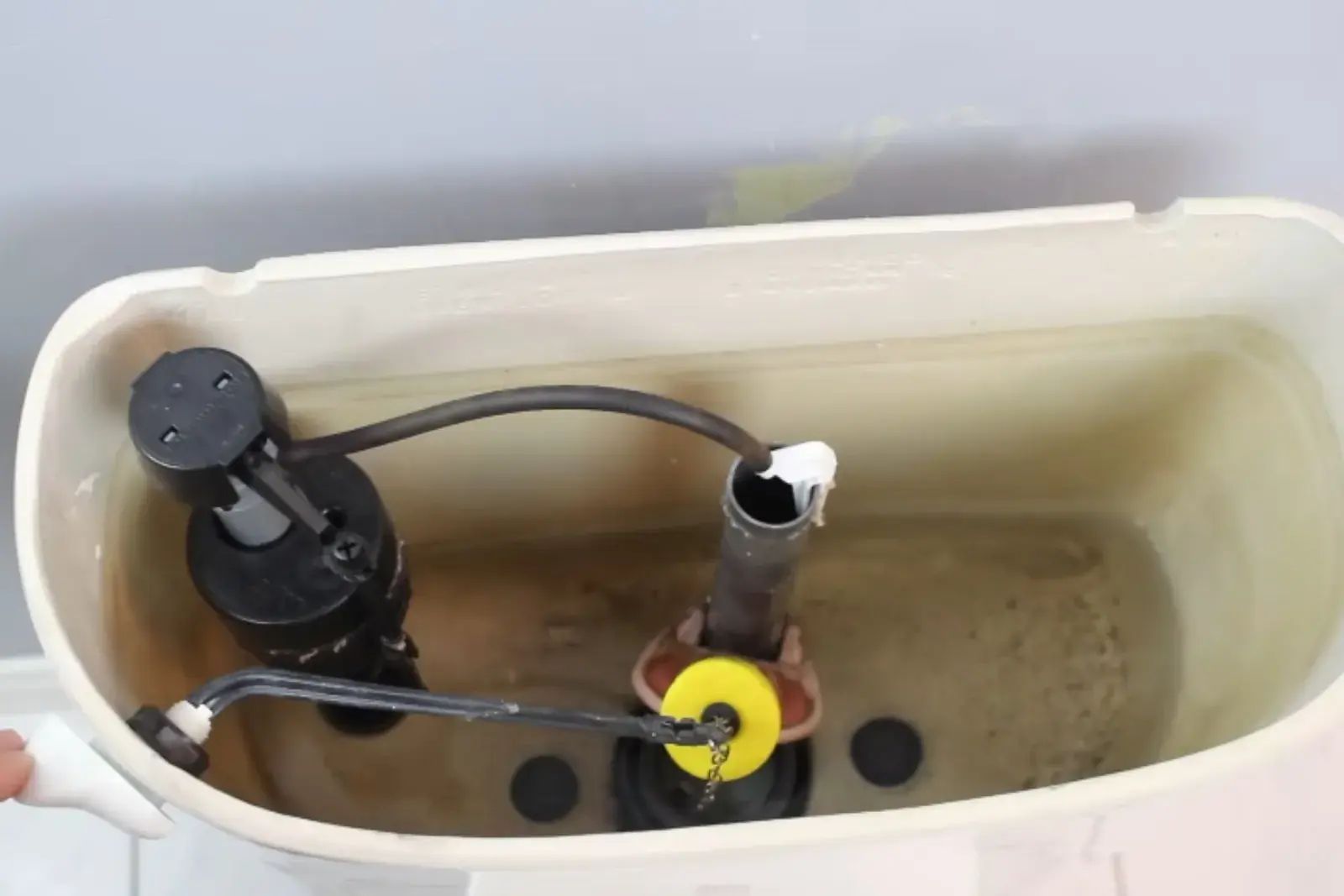
An overflowing toilet is an emergency. Close the small valve on the wall behind it by turning it clockwise, lift the tank lid and push the flapper down to stop the flow. Then call the 24/7 line. We handle toilet emergencies at night and on weekends, and a plumber can usually be scheduled the same day.
If other fixtures are gurgling at the same time, the blockage may be in the main line rather than the toilet.
Emergency Toilet Problems: What to Do First
Overflow, a toilet that will not stop running and a leak around the base all damage floors. Shut the supply valve, mop standing water, and put towels around the base. If the toilet is stopped up and rising, do not flush again. Plunging with a flat-flange plunger helps with a simple clog, and a bucket helps remove water from a full bowl.
Common Toilet Problems and Fixes
| Symptom | Cause | Repair |
|---|---|---|
| Runs constantly | Worn flapper or fill valve | Replace the part. |
| Water at the base | Failed wax ring or cracked flange | Reset the toilet with a new ring and flange repair. |
| Rocks when you sit | Loose bolts or uneven floor | Reset and shim. |
| Weak flush | Clogged rim jets or low tank water | Clean and adjust. |
| Slow fill and noisy | Worn fill valve | Replace the valve. |
| Clogs often | Partial drain blockage or older low-flow design | Clear the line, consider replacement. |
A leak at the base is the one to act on quickly. The wax ring seals the toilet to the drain, and when it fails, water seeps into the subfloor and rot starts. The toilet is lifted, the old wax is scraped, the flange is checked, and a new seal is set. If the flange is cracked, a repair ring restores a flat, firm surface.
Replacing a Toilet Instead of Repairing It
Replace when the porcelain is cracked, when repairs have piled up, or when an older high-flow fixture wastes water. Modern toilets use far less water per flush, and the savings add up on a bill that already reflects moderately hard Magna water. Choose a model with a rough-in distance that matches your drain, which is measured from the wall to the bolt center.
What a toilet installation includes
- Shutting off water and removing the old fixture.
- Inspecting and repairing the flange.
- Setting a new wax or foam seal and tightening bolts evenly.
- Connecting the supply line and testing the flush.
- Checking for leaks at the base and the supply connection.
Hard Water and Fixture Wear
Mineral buildup from Magna's moderately hard water, averaging 105 mg/L in the district's 2023 report, can clog rim jets and sticks fill valve parts. Descaling the jets and replacing a stiff fill valve restores performance without a full replacement.
A toilet that clogs repeatedly may point to a drain problem beyond the bowl. See drain cleaning for that side. A leaking shutoff valve behind the toilet is covered on the faucet and sink repair page.
What Affects Toilet Repair Cost
Simple parts cost little, and flange or subfloor damage changes the scope.
Insurance and your real number
Water damage from a sudden overflow may be covered, but gradual leaks usually are not. Check your policy. Call (385) 488-1892 for a quote.
Water on the Bathroom Floor?
Shut the supply valve and call the 24/7 line.
Code Details Behind Toilet Installation
Utah applies the International Plumbing Code (IPC) with statewide amendments, and your city or county building department enforces it. Toilet installation involves the flange height, the wax or foam seal, the clearance around the bowl and the water supply connection. Replacing a fixture like for like seldom needs a permit, while moving a toilet to a new spot usually does.
Toilet Questions
Yes. The emergency line is open 24/7, and an overflowing or leaking toilet is dispatched as an emergency.
A worn flapper or fill valve is the usual cause. It is a simple repair.
Water around the base, a rocking toilet or a sewer smell are signs.
Yes. The plumber checks the rough-in and flange first.
A deeper blockage may be in the branch drain or main line. A cable or camera can find it.