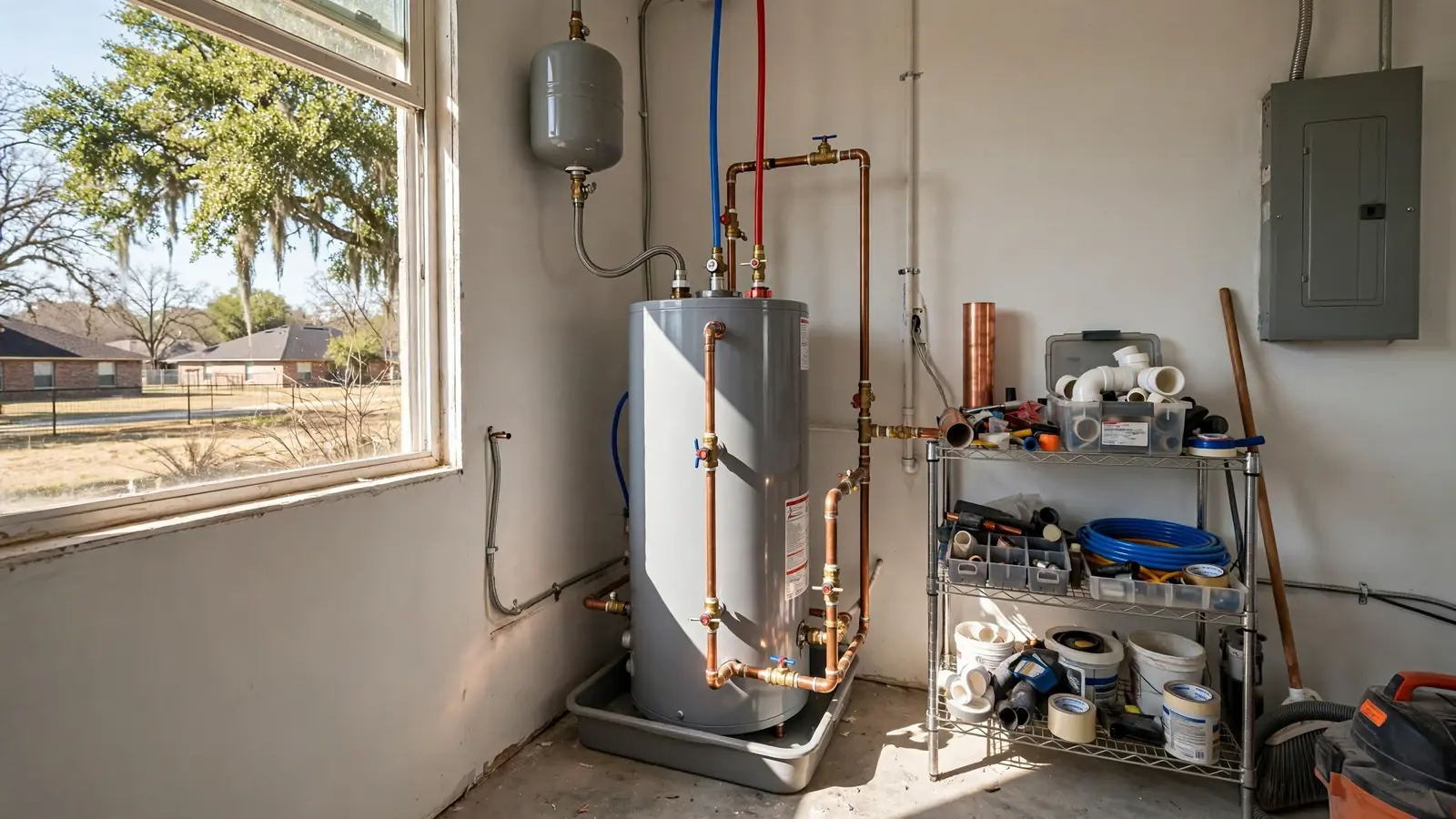
A gas water heater installation includes much more than setting a tank in place. The installer sizes the unit, connects the gas line, vents the exhaust, adds a relief valve with a discharge pipe, and tests everything for leaks. Done right, the new heater runs safely for years. If yours has failed and you have no hot water, call the same day and ask about replacement options.
Sizing the Tank
The right tank size depends on the number of people, bathrooms and appliances. A 40 gallon tank suits a couple or small family. A 50 gallon tank is common for a family of four. Larger households may want 75 gallons or a tankless unit. Look at the first hour rating on the label, which tells you how much hot water the heater delivers in the first hour of use.
Venting: The Part That Cannot Be Wrong
A gas heater produces exhaust that must leave the house. Atmospheric vent models use a natural draft chimney or flue. Power vent models use a fan and plastic pipe. Direct vent models take combustion air from outside and exhaust it outside. The venting must match the heater and the house.
A vent that is the wrong size, slopes wrong or leaks can let carbon monoxide into the home. That is why venting is checked first and tested after.
| Type | How it works | Good fit |
|---|---|---|
| Atmospheric | Natural draft through a flue | Existing chimney or flue in good shape. |
| Power vent | Fan pushes exhaust through plastic pipe | No usable chimney, longer runs. |
| Direct vent | Sealed, outside air in, exhaust out | Tight homes, closets. |
| Condensing | Extracts extra heat, needs drain | High efficiency goals. |
Gas Line, Sediment Trap and Shutoff
The installer connects a gas supply line with a shutoff valve within reach. A sediment trap, sometimes called a drip leg, catches debris in the gas line before it reaches the burner. A flexible connector links the line to the heater. After the connections are made, they are tested with a leak solution. If you ever smell gas, leave the house and call your gas utility or 911.
The Relief Valve and Expansion Tank
Every heater needs a temperature and pressure relief valve with a discharge pipe that runs to a safe location. This valve opens if pressure or temperature gets dangerous. If your system has a check valve or pressure reducing valve, water cannot flow back into the supply, so thermal expansion needs a place to go. An expansion tank handles that and protects the tank and fixtures.
A complete installation includes
- The new tank, sized and positioned on a level base or pan.
- Gas line connection, shutoff and sediment trap.
- Venting that matches the heater type.
- A relief valve and a safe discharge pipe.
- An expansion tank where the system needs one.
- Seismic strapping where required, and a leak test.
Magna Note: Who May Do This Work
The Utah Division of Professional Licensing lists plumbing license classifications that include apprentice, journeyman, residential journeyman, master and residential master plumbers. The division's website provides a license lookup so you can confirm a plumber's license before they work in your home.
Utah, like most states, treats gas piping work as licensed work, so verify the installer's license in the state lookup before you sign. Then ask the plumber whether the job needs a permit and an inspection in your jurisdiction, since requirements vary by city and county. We do not quote a code edition here because it changes, and your building department can tell you what applies at your address.
Earthquake Strapping in a Seismic Area
Magna sits in an active earthquake region. A water heater that tips can break gas and water lines and start a fire. Straps that anchor the tank to wall studs reduce that risk. Ask the installer to strap the tank and flex the connections, and ask your building department what is required in your area.
What to Do With the Old Heater
The installer disconnects the old tank, drains it and hauls it away. Many scrap yards recycle the steel. Ask whether disposal is included in the price. If the old tank is leaking, shut off the water and gas to it before the plumber arrives.
Planning the job in advance is easier than reacting to a failure. See water heater installation for the installation service, or water heater replacement if yours has failed and you need hot water fast.
Customers in Taylorsville and West Jordan often ask about moving a heater to a better location. That is possible, but it changes the vent and gas runs and may need a permit.
Day of the Install: What to Expect
Prepare the space
The installer clears the area, shuts off water and gas and drains the old tank.
Remove the old unit
Connections are disconnected and the tank is carried out.
Set and connect the new heater
The tank is placed, plumbed, vented and connected to gas.
Fill and test
The tank is filled, air is purged and connections are checked for leaks.
Light and verify
The burner is lit, the vent is checked for draft and temperature is set.
Set the thermostat to a safe temperature. Many manufacturers ship units at a setting that is hotter than needed. A lower setting reduces scald risk and saves energy, though it should be high enough to meet your household's needs.
Carbon Monoxide and the Detector Question
Gas appliances can produce carbon monoxide if they vent poorly or burn incorrectly. A working carbon monoxide detector on each level, and one near the sleeping areas, is cheap protection. Test it when the new heater goes in. If the detector ever sounds, leave the house and call 911 or your gas utility.
Why the Code Is Not Optional
Utah applies the International Plumbing Code (IPC) with statewide amendments, and your city or county building department enforces it. For gas heaters, the details are venting, combustion air, relief valve discharge and the gas connection. Ask the plumber to show you the permit and the inspection record when the job is done.
Gas Water Heater Installation Questions
A like-for-like replacement often takes a few hours. Changes to venting or gas lines take longer.
Gas and venting errors can be dangerous. Most jurisdictions require a licensed plumber, and a permit may apply.
The Division of Professional Licensing offers an online license lookup. Search by name or license number.
Match the first hour rating to your peak use, and consider a bigger tank if you often run out.
If your plumbing has a check valve or pressure reducing valve, usually yes.