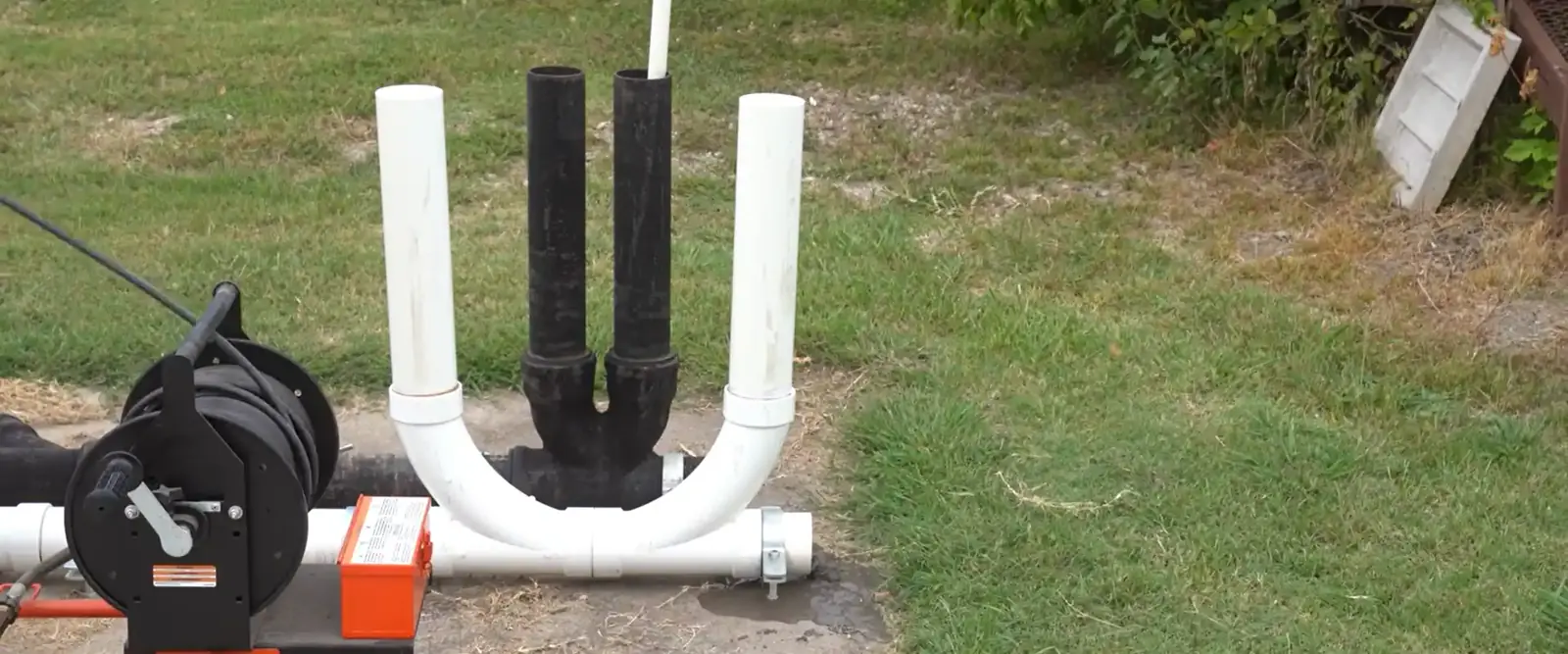
Hydro jetting cleans a sewer line by blasting it with high-pressure water from a special nozzle. Unlike a cable, which punches a hole through a clog, a jetter scours the entire pipe wall and carries debris out. It is the best tool for grease, silt and many roots. It is not for every pipe, and a camera should look first.
How Hydro Jetting Works
A hose with a nozzle is fed into the line through a cleanout. The nozzle has jets that point backward and forward. Water at high pressure pulls the hose along the pipe and cuts through buildup. The debris is flushed downstream. The plumber then runs a camera to confirm the result.
Jetting Versus Cabling
| Situation | Cable | Jetter |
|---|---|---|
| Single solid blockage | Good | Good. |
| Grease coating the pipe wall | Leaves a film | Cleans the wall. |
| Root mass | Cuts a path | Cuts and flushes. |
| Sand and silt | Pushes it around | Flushes it out. |
| Fragile or broken pipe | Careful use | Risky. |
| Repeat clogs | Short relief | Longer relief. |
What Jetting Is Good At
Jetting suits
- Grease buildup in kitchen and restaurant lines.
- Root growth in joints, once the roots are cut.
- Sand, silt and scale on pipe walls.
- Preparing a pipe for lining.
- Maintenance on lines that clog repeatedly.
When Not to Jet
Water at high pressure can damage a pipe that is already cracked, broken or badly offset. Old clay or cast iron can fail under the stress. A camera inspection first shows the pipe's condition. If the camera finds serious damage, the plumber may choose a gentler tool or recommend repair first.
Jetting also cannot fix a belly, a collapse or a missing section. It cleans the pipe but does not change its shape.
Magna Note: A Pipe That Has Been Shaken
The Utah earthquake program reports that the March 18, 2020 magnitude 5.7 earthquake north of Magna was followed by 2,590 located earthquakes through February 28, 2021. Depths ranged from about 1 to 8 miles. The same report says the most severe damage in the valley was in Magna.
Ground shaking on that scale can crack older pipe or shift joints without any visible sign inside the house. If your lateral has never been inspected, a camera before jetting is cheap insurance against making hidden damage worse. A plumber can then pick the right pressure and nozzle for what the camera shows.
Jetting for Commercial Lines
Restaurants and shops along 3500 South and Main Street often need jetting on a schedule because of grease. A regular jetting program keeps floor drains and kitchen lines running. See commercial plumbing for after-hours service.
After the Jetting
A camera run shows the cleaned pipe. If it reveals cracks or roots, the plumber explains repair options. If the pipe is clean and sound, the fix is maintenance, such as keeping grease out of the drain. Magna Water District provides sewer service, so a clean lateral flows into a system the district maintains.
Read hydro jetting for the service and sewer line repair if the camera finds damage.
Homes in West Valley City and Kearns with older laterals call about the same issue. Jetting is often the right first step, after a camera.
What to Expect During a Jetting Visit
Find the cleanout
The plumber locates the access point, often outside near the foundation.
Run the camera
A first run shows pipe material, damage and obstruction.
Jet the line
The nozzle is fed through while water pressure scours the pipe wall.
Recheck with the camera
A second run confirms the pipe is clean and shows what remains.
Review and advise
You see the footage and hear what maintenance or repair is needed.
The plumber may need to clear a heavy blockage with a cable first so the jetter can pass. Plan for the sewer line to be out of service for the visit, and keep water off until the plumber says the line is clear.
Keeping a Jetted Line Clean
Maintenance habits after jetting
- Keep grease, oil and fats out of every drain.
- Only flush toilet paper, never wipes labeled flushable.
- Use drain screens in kitchen and shower drains.
- Have trees near the lateral checked for root growth.
- Schedule a camera check if the line clogs again within a year.
Jetting for Roots: What Actually Happens
A root mass in a sewer line is a living thing. A jetter with a root-cutting nozzle shreds the roots inside the pipe and flushes them out. It does not kill the tree, so roots grow back toward the joint if the joint stays open. Some plumbers follow cutting with a root treatment approved for sewers, and others recommend lining or repairing the joint to close the path.
| Strategy | Result | Trade-off |
|---|---|---|
| Cable cutting | Quick relief | Roots return within months. |
| Hydro jetting with root nozzle | Cleaner pipe wall, longer relief | Does not close the entry point. |
| Pipe lining | Seals joints and cracks | Pipe must be round and continuous. |
| Spot repair | Fixes one joint | Needs excavation. |
Why Grease Is a Jetting Job
Kitchen grease cools and hardens on the pipe wall. Each wash adds another film until the opening narrows. A cable punches a hole through that blockage, but the wall stays coated, and the line clogs again. A jetter strips the coating back to bare pipe. For restaurants, a regular jetting schedule, a working grease trap and staff training are the three pieces of the answer.
Questions to Ask About Equipment
Before you book jetting
- What pressure and flow does your jetter use for a residential line?
- Which nozzles do you carry for roots, grease and silt?
- Will you camera the line before and after?
- Can I have the recording?
- What happens if the camera finds damage midway?
Ask for the written findings after the visit. A good report names the pipe material, the length cleaned, the condition seen on camera and whether a follow-up is recommended.
Guidelines for Jetting Safely
Equipment makers publish guidelines for pressure, nozzle choice and operator safety, and plumbers follow them to protect both the pipe and the person holding the hose. Utah applies the International Plumbing Code (IPC) with statewide amendments, and your city or county building department enforces it.
Hydro Jetting Questions
Not sound pipe. It can damage cracked or fragile pipe, which is why a camera inspection comes first.
Only when needed, unless grease or roots make it a repeat problem.
The work happens at the cleanout, and the debris flows into the sewer. Water use is high during the job.
The state earthquake report documents strong shaking in 2020, with the most severe damage in Magna. Pipes may have hidden cracks.
It removes them, but they return if joints stay open.