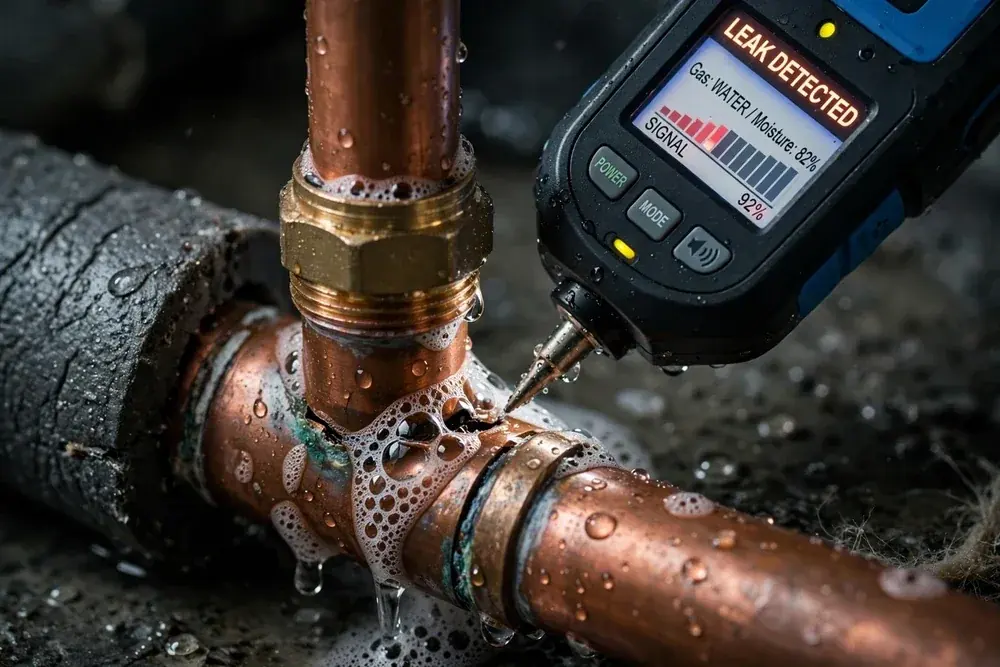
Commercial leak detection finds water loss in shops, restaurants, warehouses and offices before it turns into damage. The process starts with a meter test after hours, narrows the leak to a zone using shutoffs and submeters, then pinpoints it with acoustic, thermal and pressure tools. Early detection protects inventory, floors and tenants, and it reduces bills.
Why Commercial Leaks Hide
Commercial buildings are large and complex. Pipes run through ceilings, slabs, shafts and mechanical rooms. Water use varies during the day, so a leak can hide in normal use. A leak in a fire line, a landscape irrigation zone or a roof drain may not be visible for weeks.
The After-Hours Meter Test
Choose a quiet time
Do the test when the building is empty and no equipment is running.
Shut off known water uses
Turn off irrigation, process equipment and cooling water where safe.
Read the meter twice
Compare readings over a measured period.
Look for movement
Any steady movement points to a leak somewhere downstream of the meter.
Narrowing the Zone
| Location | Typical source | Method |
|---|---|---|
| Underground service line | Corroded pipe, joint failure | Acoustic, correlator. |
| Under slab | Copper pinholes, fittings | Acoustic, thermal, tracer gas. |
| Ceiling and walls | Supply lines, valves | Thermal, moisture meter. |
| Mechanical room | Boiler makeup, pumps | Visual, pressure test. |
| Fire or sprinkler line | Joint or valve leak | Pressure test, isolate zones. |
| Irrigation | Broken head, zone valve | Zone shutoff test. |
Closing zone valves one at a time and watching the meter shows which section is leaking. A submeter on a tenant space does the same job faster.
Tools Used
Typical tools
- Acoustic sensors and correlators for pressurized pipes.
- Thermal cameras for warm leaks and wet areas.
- Moisture meters for damp walls and floors.
- Pressure testing to isolate zones.
- Video inspection for drain lines and storm drains.
Magna Note: Wells Plus an Emergency Connection
Magna Water District's 2023 report says its supply comes from ten wells in two well fields. The district also holds a perpetual yearly contract with Jordan Valley Water Conservancy District, which serves as a redundant supply for emergencies.
For a commercial building, that matters when pressure or supply changes unexpectedly. A drop in pressure can come from your building's leak, a district operation or a switch to the backup supply. Before you assume your leak caused it, ask the district whether any work is under way. Then use a meter test to see whether water is actually leaving your building.
Documentation Managers Should Keep
Record water bills for the past year, the meter reading dates, any submeter data and maintenance logs for boilers, cooling equipment and irrigation. This history shows when a leak began and helps with insurance. Take photos of any visible damage before cleanup.
Tenants who see ceiling stains or smell musty air should report them promptly. Early reports save a building from larger damage.
Hidden Water Costs
A small leak running for months can waste more water than a visible burst pipe. Leaks also encourage mold and can damage floors and stored goods. Commercial property insurance varies in how it treats gradual leaks, so read your policy and report problems promptly.
For after-hours response and fixture work, see commercial plumbing. For hidden leaks in any building, see leak detection. Businesses in West Valley City and Kearns along the 3500 South corridor use the same process.
Leaks in Buildings Common Around Magna
Older storefronts along Main Street often have a mix of original and replacement piping. Industrial and warehouse buildings along 3500 South and near SR-201 have large roof drains, fire lines and process water. Each has different weak points. A plumber walking the building identifies which system is the likely culprit before pulling out equipment.
| Building | Likely hotspots |
|---|---|
| Older storefront | Mixed supply piping, basement joints, restroom stacks. |
| Restaurant | Dishwasher lines, ice machines, grease line joints. |
| Warehouse | Roof drains, fire lines, underground service. |
| Office | Restroom supply lines, HVAC condensate, water heater. |
| Mixed-use | Shared risers, tenant sub-meters, roof drains. |
Choosing When to Test
Testing at night or on a weekend, when the building is quiet, makes the meter reading clearer. Tell staff in advance so no equipment is left running. Document what you shut off so the plumber knows the baseline. If the building has a fire sprinkler system, ask whether it can be isolated safely, since most are tested by qualified contractors.
What Property Managers Can Do Before the Plumber Arrives
Prepare the building
- Find the water meter and note its location and size.
- Gather twelve months of water bills.
- List any recent construction, tenant changes or equipment installs.
- Identify every irrigation, fire and process water connection.
- Give the plumber a contact who can open mechanical rooms after hours.
A building with recent tenant improvements is a prime suspect. Cut-in fixtures, new restrooms and relocated water heaters introduce joints that did not exist before. A leak that appeared after a renovation points to the renovation.
If you have submeters, read each one on the same day and compare it with the previous month. A tenant space with a sudden rise is the place to start.
What the Final Report Should Include
A useful leak report names the location, describes the cause and attaches a photo or a measurement. It states whether the leak is active, how much water is likely being lost and what repair is recommended. Keep the report with your maintenance records, since insurers and lenders sometimes ask for it later.
Putting a Number on the Loss
Once the leak is found, estimate how much water was lost. Compare your normal daily use with the leaking period, then multiply by the number of days. That figure helps with insurance, with a request to your water provider about billing, and with deciding whether a quick repair or a larger upgrade is justified. Keep the calculation with the leak report.
Standards for Commercial Systems
Commercial water systems follow the model plumbing code and fire protection standards. Utah applies the International Plumbing Code (IPC) with statewide amendments, and your city or county building department enforces it. Fire sprinkler systems are governed by separate standards, so only qualified fire protection contractors should test or repair them.
Commercial Leak Detection Questions
Yes. Many meter tests are best done when the building is empty.
Usually only parts of it, and only briefly.
Yes. A steady leak can add up to a large amount of water over weeks.
The district's 2023 report describes a yearly contract with Jordan Valley Water Conservancy District as a redundant supply for emergencies.
Water bills, building plans if available, and access to mechanical rooms and meters.